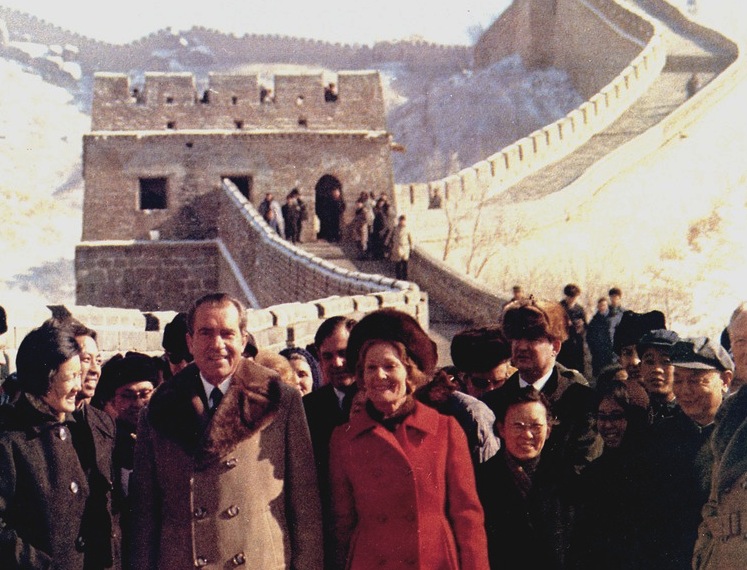
Most diplomatic communiqués are bland, boring, and forgettable. They emphasize areas of agreement, smooth over differences, and list a raft of minor, joint activities. The 1972 Shanghai Communiqué, which set the course for U.S.-China normalization, is the exception in both form and function. Negotiated by Henry Kissinger and Zhou Enlai, the document enshrined Richard Nixon’s historic opening to China. It reset the Cold War’s terms and put into place key, enduring elements of the American approach to Beijing. It’s the rare diplomatic document still frequently read today.
The Communiqué starts, remarkably, not with where the United States and China agree but rather with their differences. I once asked Dr. Kissinger about this very unusual approach to a major diplomatic statement. The American delegation had, he explained, brought to China a standard draft, one that emphasized harmony while papering over the two countries’ obvious disagreements. “Zhou took a look,” Kissinger recalled, “and said ‘This is bullshit.’” The two countries were estranged, had fought each other in Korea, and differed on everything from democracy to global revolution. It was hardly credible, Zhou thought, to pretend otherwise.
The two sides did, however, agree on one big thing: neither should fall victim to the Soviet Union’s hegemonic ambitions. That, it turned out, was enough. Each side enumerates in the Communiqué its views about Indochina and Korea, the causes of conflict, the direction of history, the role of individual freedom (for the United States), and the inevitability of revolution (for China). Then come the key lines: “Each is opposed to efforts by any other country or group of countries to establish [...] hegemony” in the Asia-Pacific region and, toward that end, the two will seek to normalize their relations. The vastly different governments bound themselves in common opposition to Soviet aggression.
Proponents of the Communiqué, and of the diplomatic warming that followed, have attributed many benefits to them. By aligning the United States and China, the two balanced Soviet power and isolated Moscow, which in turn made the Soviets more pliant in arms control negotiations. China stopped its practice of bankrolling revolutionary activity abroad. The agreement restored U.S. global credibility after the failures in Indochina and may have helped with the Vietnam peace negotiations. Perhaps the Shanghai Communiqué helped win the Cold War.
The more grandiose claims are debatable. What is not is the Communiqué’s role in establishing the basic framework for U.S.-China relations, one that endures in many ways more than five decades later. It kicked off diplomatic normalization and trade between what are now the two richest and most powerful countries. It enshrined the One China policy and strategic ambiguity toward Taiwan. And it embraced the notion that, for all the differences, bilateral engagement would serve each side better than estrangement. Only recently have the two governments begun to reassess the fundamental contours of a bilateral relationship set into motion in 1972.