About This Web Exhibition

Since the Declaration of Independence, American citizens and their elected officials have debated the appropriate role for the United States in the world. To celebrate 250 years of American independence, The Vandenberg Coalition asked our network to dive into these debates and the history of American national security, focusing on the lasting impacts of the key speeches and documents from the last quarter millennium. As this timeline shows, the importance of American global leadership to secure our interests and protect our values has grown significantly, as have the responsibilities and challenges that global leadership entails. Woven throughout the timeline is one key message—that American leadership is nuanced, ever-evolving, and essential to the preservation of our most beloved freedoms.

Explore the Timeline
An Emerging Republic  · 1776–1823
Click to watch

Declaration of Independence

Although the Founders could not have anticipated the magnitude and scope of American foreign policy 250 years later, the Declaration of Independence chartered this American conception of foreign policy and the principles that should guide it.

Analysis by Ethan Minkoff

Read More
Treaty of Alliance with France

Treaty of Alliance with France

The alliance with France was made possible by grit, bravery, and the American spirit.

Analysis by Jessica Farrell

Read More
U.S. Constitution

U.S. Constitution

The Constitution establishes the safeguards that protect American liberty within our borders; foreign policy, in turn, must develop strategies to defend that same liberty from threats beyond them.

Analysis by Carrie Filipetti

Read More
The Federalist

The Federalist

Publius argued that only a stronger union and more energetic federal government—restrained by suitable checks and balances to preserve liberty—could address this particularly daunting situation and others which may arise in the future to threaten American independence.

Analysis by Michael Lucchese

Read More
Washington’s Farewell Address

Washington's Farewell Address

The Farewell Address continues to remind today’s foreign policy leaders that American engagement abroad should always serve the larger goals President Washington championed: preserving independence, building and maintaining military strength, engaging diplomatically and economically, and advancing the founding principles of liberty, freedom, and justice.

Analysis by Rachel Hoff

Read More
The Louisiana Purchase Treaty

The Louisiana Purchase Treaty

The Louisiana Purchase was crucial to America establishing itself as a continental nation, a theme that came to dominate 19th century U.S. foreign policy.

Analysis by Thor Mortenson

Read More
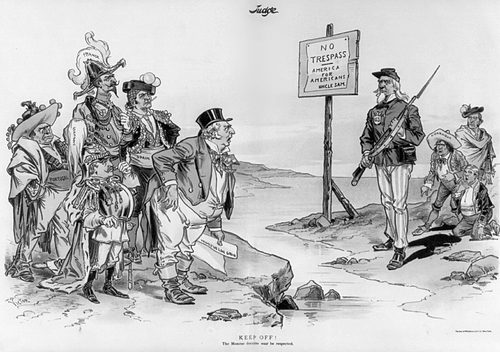
Monroe Doctrine

Monroe Doctrine

The Monroe Doctrine, articulated by President James Monroe in 1823, declared the Western Hemisphere off-limits to further European colonization or interference, while pledging U.S. non-involvement in European affairs.

Analysis by Marshall Billingslea

Read More
An Emerging Global Power  · 1899–1944
John Hay's First Open Door Note

John Hay's First Open Door Note

The Open Door policy became a foundational principle of U.S. engagement throughout East Asia, establishing the basic logic of its international economic policy.

Analysis by Zack Cooper

Read More
Roosevelt Corollary to the Monroe Doctrine

Roosevelt Corollary to the Monroe Doctrine

Announced in 1904, it recognized that American security and prosperity were inseparable from regional stability, and that a retreat from hemispheric leadership would invite greater risks to the U.S. homeland—lessons that remain fully applicable for the current geopolitical moment.

Analysis by Juan Cruz

Read More
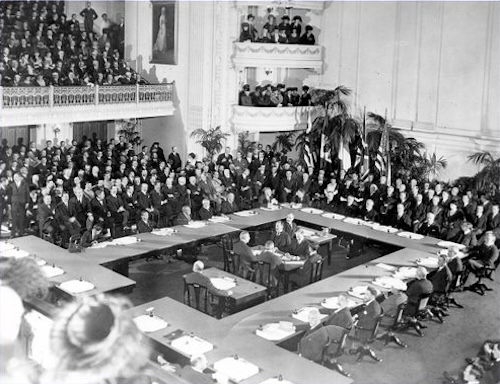
Treaty of Versailles

Treaty of Versailles

The defeat of the Versailles treaty meant that America returned to a posture of strict disengagement from European security arrangements. But the real tragedy here was not the defeat of Wilson’s vision. Rather, the problem was Wilson’s utter refusal to compromise.

Analysis by Colin Dueck

Read More
Arsenal of Democracy Speech

Arsenal of Democracy Speech

This was a speech—a “fireside chat”—about factories and shipyards, but also about geography, power, and the limits of distance in a shrinking world.

Analysis by John Hillen

Read More
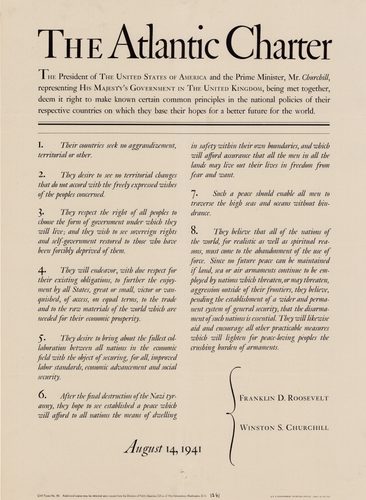
Atlantic Charter

Atlantic Charter

It laid the foundations for what became the U.S.-led international order and 80 years of unprecedented peace, prosperity, and freedom.

Analysis by Matthew Kroenig

Read More
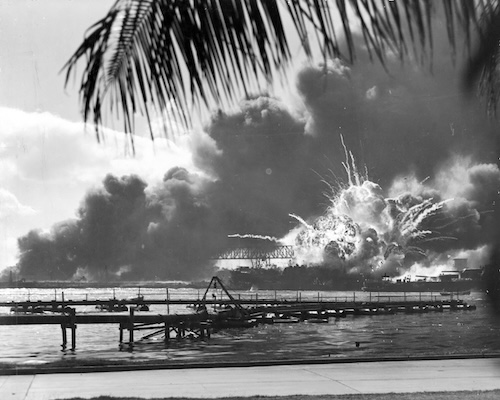
Day of Infamy Speech

Day of Infamy Speech

In his address, President Roosevelt did not speak of vengeance but of the righteousness of the American cause.

Analysis by Anne Lord

Read More
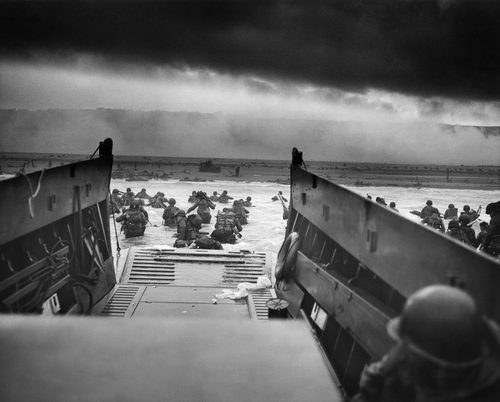
Eisenhower's Order of the Day

Eisenhower's Order of the Day

The tone in Eisenhower’s order still resonates today as an example of how leaders can mobilize support and provide direction to a great cause.

Analysis by Thomas Spoehr

Read More
A Strategy for Winning the Cold War  · 1945–1950
Click to watch

Vandenberg’s Speech Heard ‘Round the World

Senator Vandenberg’s balanced view of America’s enlightened self-interest and call for “honest candor” from our leaders remain essential guiding principles for U.S. foreign policy today.

Analysis by Sydney Novak

Read More
Click to watch

George Kennan's Long Telegram

George Kennan’s Long Telegram was not only the most detailed account of the nature of the challenge presented by the Soviet Union at the onset of the Cold War, but it also provided the blueprint for how the United States could properly defend itself against—and ultimately defeat—that challenge.

Analysis by Ethan Minkoff

Read More
Click to watch

Truman Doctrine Speech

We are in Harry Truman’s world and today’s battlefields are exactly the places he warned us to maintain vigilance—Eastern Europe, the Middle East and Korea, Japan and China.

Analysis by Secretary Robert Wilkie

Read More
Marshall Plan Speech

Marshall Plan Speech

It is no exaggeration to say that the Marshall Plan set the post-war foundation for what became the transatlantic world.

Analysis by Peter Rough

Read More
America's Recognition of Israel

America's Recognition of Israel

Those few formal words of recognition opened the door to a relationship that, while distant from 1948 to 1967, has since that date grown increasingly close and is now at the center of U.S. policy in the Middle East.

Analysis by Elliott Abrams

Read More
Universal Declaration of Human Rights

Universal Declaration of Human Rights

Never before had representatives from every major region of the world cooperated to codify a set of universal principles to serve as, according to the UDHR’s preamble, “a common standard of achievement for all peoples and all nations.” That common standard stemmed from, as the UDHR preamble also stated, “recognition of the inherent dignity and of the equal and inalienable rights of all members of the human family.”

Analysis by Peter Berkowitz

Read More
NSC-68

NSC-68

NSC-68 was written because the gap between resources and desired end states had become untenable. It remains an open question whether Washington has fully absorbed that lesson today.

Analysis by Mark Montgomery

Read More
Winning the Cold War  · 1962–1987
Kennedy’s Moon Speech

Kennedy’s Moon Speech

Building on his address to Congress months earlier, the speech crystallized a national commitment to an ambitious idea, disciplined execution, and perseverance at a pivotal moment in the Cold War.

Analysis by Kari Bingen

Read More
Shanghai Communiqué

Shanghai Communiqué

It embraced the notion that, for all the differences, bilateral engagement would serve each side better than estrangement. Only recently have the two governments begun to reassess the fundamental contours of a bilateral relationship set into motion in 1972.

Analysis by Richard Fontaine

Read More
The Helsinki Accords

The Helsinki Accords

The Helsinki Accords are often credited with laying the groundwork for the fall of communism in Eastern Europe, and eventually the collapse of the Soviet Union.

Analysis by Amy Mitchell

Read More
Ronald Reagan's Westminster Address

Ronald Reagan's Westminster Address

Reagan is right: democracy and freedom are not fragile flowers. The United States is the proud heir and leader of a Western civilization with roots in Jerusalem, Athens, Rome, and London, and it is a civilization that remains worth fighting to preserve today.

Analysis by Corban Teague

Read More
Ronald Reagan's Evil Empire Speech

Ronald Reagan's Evil Empire Speech

For Reagan, the Cold War was primarily an ideological struggle between freedom and tyranny, and the “Evil Empire” speech was another chance to share those views with America’s religious community.

Analysis by Roger Zakheim

Read More
Click to watch

Reagan's “Tear Down This Wall” Speech

Reagan’s words to “tear down this wall” were uniquely suited to the wall and the particular circumstances of the Cold War. But the underlying message is a clarion call that still resonates today: his conviction that true peace can only be achieved when the world is safe for human freedom to flourish for all people.

Analysis by Michael Allen

Read More
Global War on Terror  · 2001–2005
George Bush’s Bullhorn Speech

George Bush’s Bullhorn Speech

In this impromptu, two-minute address, President Bush reminded us that it is not our leaders or towers that keep America strong, but our faith, our people, and our freedom.

Analysis by Carrie Filipetti

Read More
George W. Bush at the 20th Anniversary of the National Endowment for Democracy

George W. Bush’s Speech at the 20th Anniversary of the National Endowment for Democracy

In his 2003 address marking the 20th anniversary of the National Endowment for Democracy (NED), President George W. Bush made a powerful case: the long-term security of the United States depends on the expansion of freedom worldwide.

Analysis by Dan Twining

Read More
George W. Bush’s Second Inaugural Address

George W. Bush’s Second Inaugural Address

President George W. Bush retained the support of the American public, shepherding us through successful military campaigns in both nations and in addressing Islamic terrorism head on. As he was sworn in for his second term, however, President Bush gave a speech on the steps of the Capitol that reflected a fundamental change in the philosophy of Republican foreign policy that continues to have significant repercussions today.

Analysis by Garrett Exner

Read More
A New Strategy for a New Threat Environment  · 2017–2025
Remarks by President Trump on the Joint Comprehensive Plan of Action

Remarks by President Trump on the Joint Comprehensive Plan of Action

A nuclear-armed Iran would forever change the landscape of the Middle East and imperil the security of all Americans. President Trump has made it clear for years that he would do everything in his power to prevent that ominous occurrence, taking robust diplomatic and economic action with this speech in 2018 and with force in 2026.

Analysis by Amanda Rothschild

Read More
Mike Pompeo’s Speech on Communist China and the Free World’s Future

Mike Pompeo’s Speech on Communist China and the Free World’s Future

While the U.S.-China relationship has not categorically shifted in the ways Pompeo called for in 2020, his remarks serve as a worthy guidepost for what America’s approach to the CCP could, and should, be.

Analysis by Michael Sobolik

Read More
2025 National Security Strategy — Trump Corollary

2025 National Security Strategy — Trump Corollary

The National Security Strategy’s declaration of a “Trump Corollary to the Monroe Doctrine” continues a long line of thinking about the strategic importance of the Western Hemisphere to the United States, its security, and its global influence.

Analysis by Ryan Berg

Read More
Built by CHROMAKAIROS for The Vandenberg Coalition, 2026. All rights reserved.