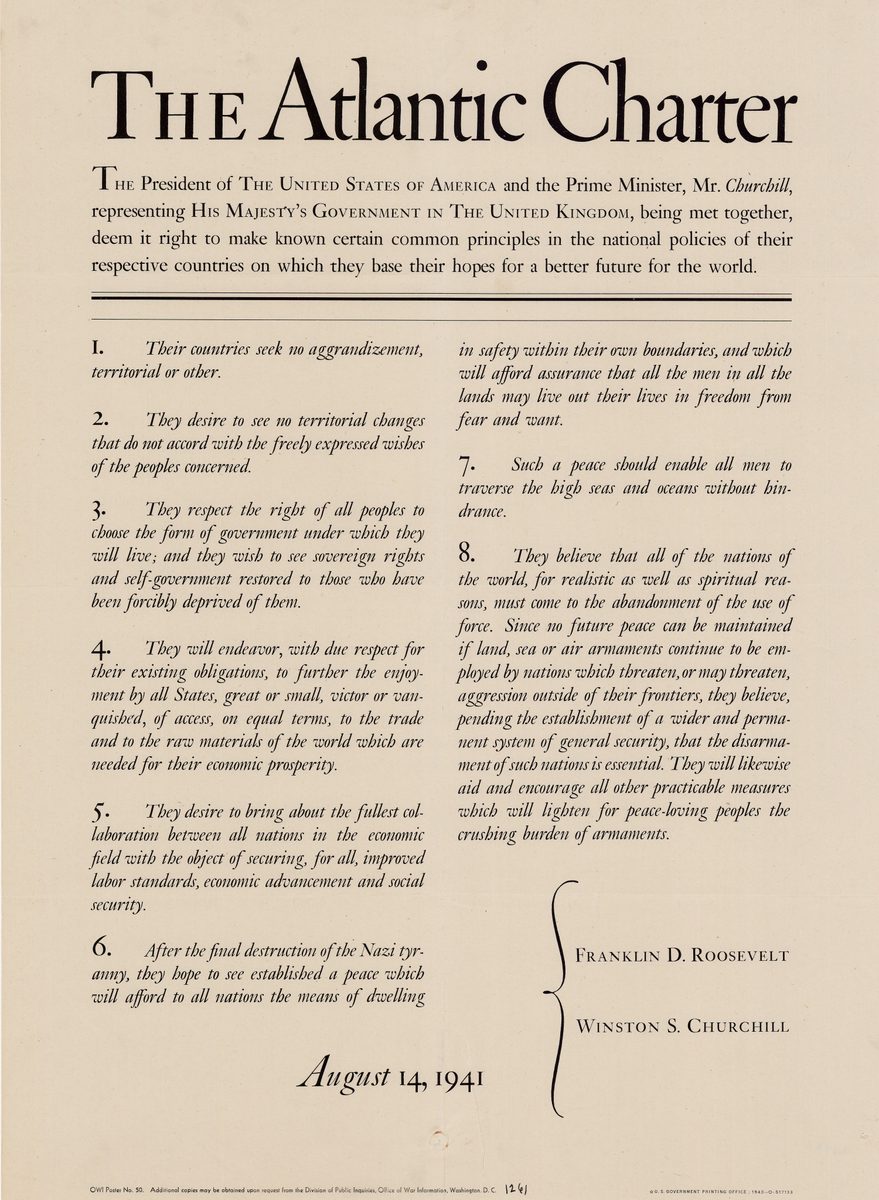
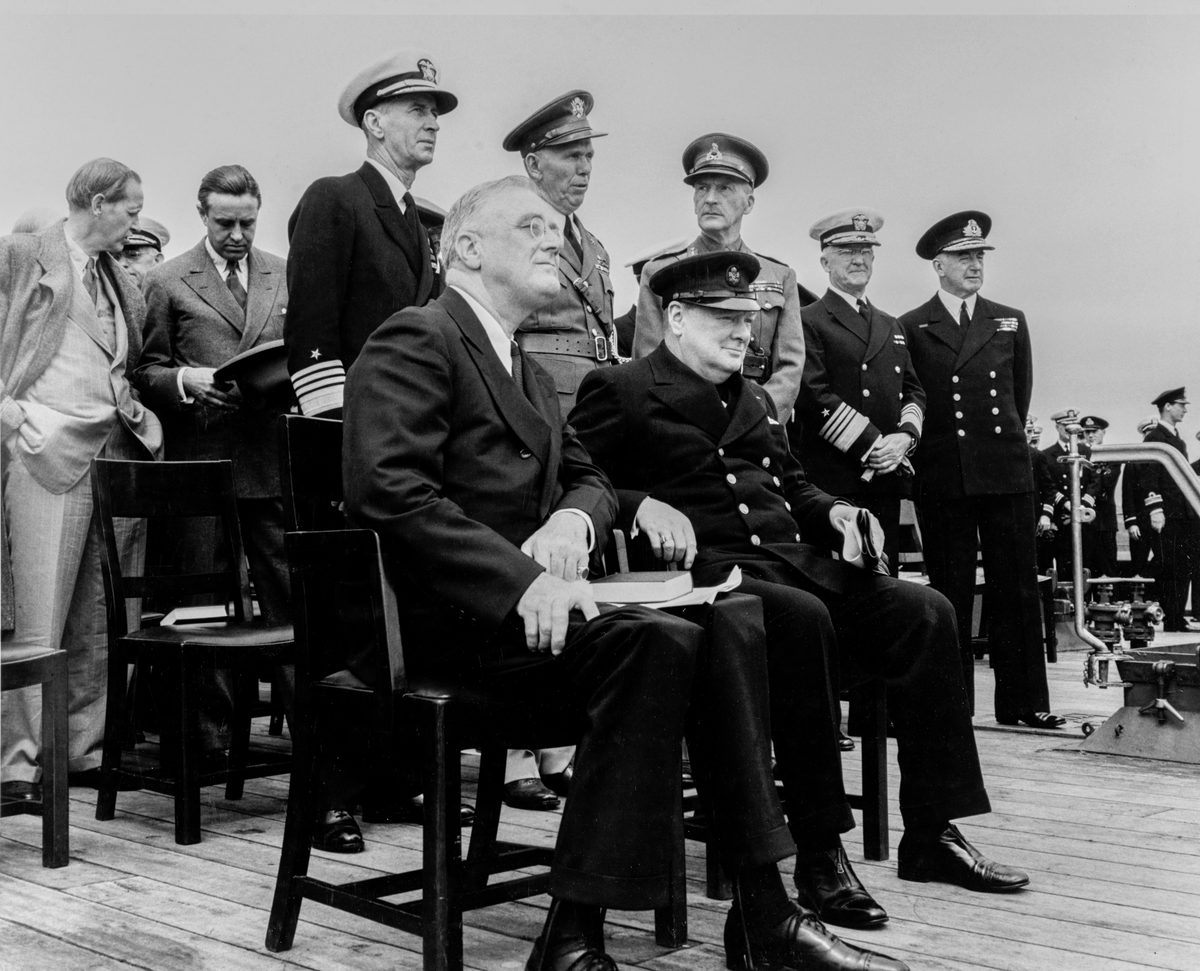
Months before the United States formally entered World War II, President Franklin D. Roosevelt and British Prime Minister Winston Churchill met aboard naval vessels off the coast of Newfoundland to co-author a shared vision for the postwar world. The resulting Atlantic Charter proved consequential. It laid the foundations for what became the U.S.-led international order and 80 years of unprecedented peace, prosperity, and freedom.
The charter outlined eight principles—no territorial aggrandizement, no territorial changes against the wishes of the people, respect for self-determination, equal access to trade and raw materials, international economic cooperation, freedom from fear and want, freedom of the seas, and disarmament of aggressor nations—that guided the Allied war effort and shaped the peace that followed. With these principles, Roosevelt and Churchill sketched the outlines of the post-World War II international order in which we are still living.
That order, led and underwritten by the United States, has proven remarkably successful. Through formal alliances and informal security partnerships, the United States helped construct a global security architecture that prevented great-power war for nearly eight decades. Deaths from armed conflict have fallen dramatically, accounting for less than 0.01 percent of the global population. Wars ending in formal territorial revision have become virtually nonexistent. By promoting free and fair trade, the United States and the world have become far wealthier. Global poverty has fallen by more than fifty percentage points and living standards have increased more than fourfold. Support for the principle of national self-determination has resulted in the proliferation of political freedom. While there were only about a dozen democracies in 1945, there are nearly 100 today.
Today, the Atlantic Charter remains relevant because the principles it articulated remain sound, but they are under renewed threat. Revisionist powers seek to tear down this order, and it will be up to Washington and its allies to revitalize and defend it.
As they do so, they should take inspiration from Roosevelt and Churchill. American leadership, strong security alliances, free and fair markets, and democracy and human rights, are the essential ingredients to preserving global peace, prosperity, and freedom.