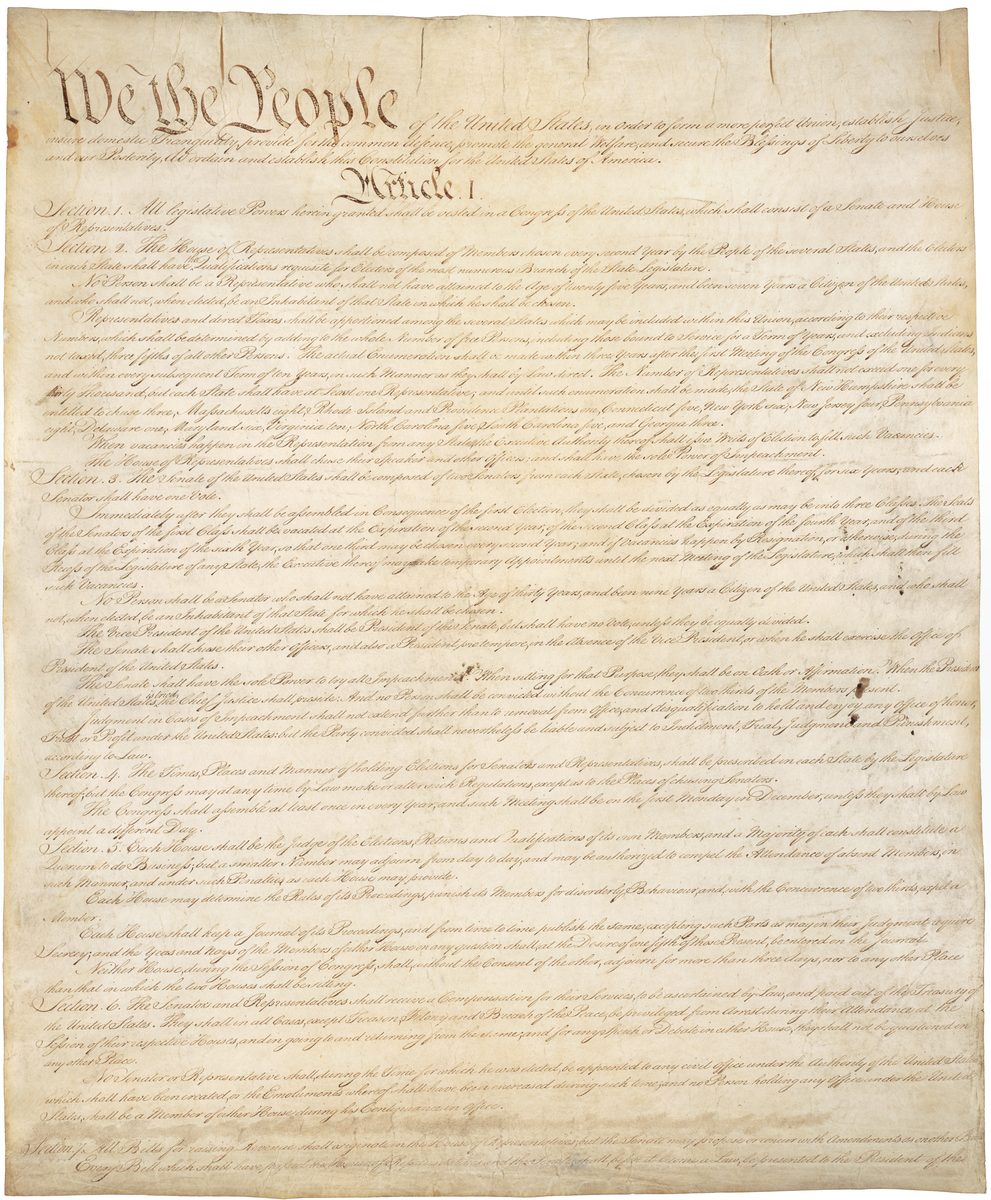
The United States Constitution is not known first and foremost as a foreign policy document. And yet this text—among the most important political documents in human history—is the birthplace not simply of our nation, but of the principles that guide our conduct in the world.
After all, what is foreign policy but the means through which the United States remains prosperous, safe, and above all, free? The Constitution establishes the safeguards that protect American liberty within our borders; foreign policy, in turn, must develop strategies to defend that same liberty from threats beyond them.
Instead of prescribing a particular foreign policy, the Constitution provides a framework for how such policy must be made. Laying out a clear separation of powers over the purse, the military, and governance as a whole, the Constitution charges our nation’s leaders with shared responsibility in the protection of the American public. But even more fundamentally, the Constitution establishes the moral foundation of the American political system. It affirms that power is derived from the people, and it recognizes that a capable defense, a just society, and human flourishing all rest upon the protection of our unalienable rights. It is both a statement of principles and a central roadmap for how to protect and defend those principles.
It is from this roadmap that America was born as the most powerful and free nation in the world. And so, when some argue that the United States must not advance policy based on these ideals but instead on a narrowly construed “national interest,” I ask: what interest could possibly be greater than preserving our founding principles? I see no better way to serve the national interest of the United States than through the defense of that which makes up our very national character: freedom itself.