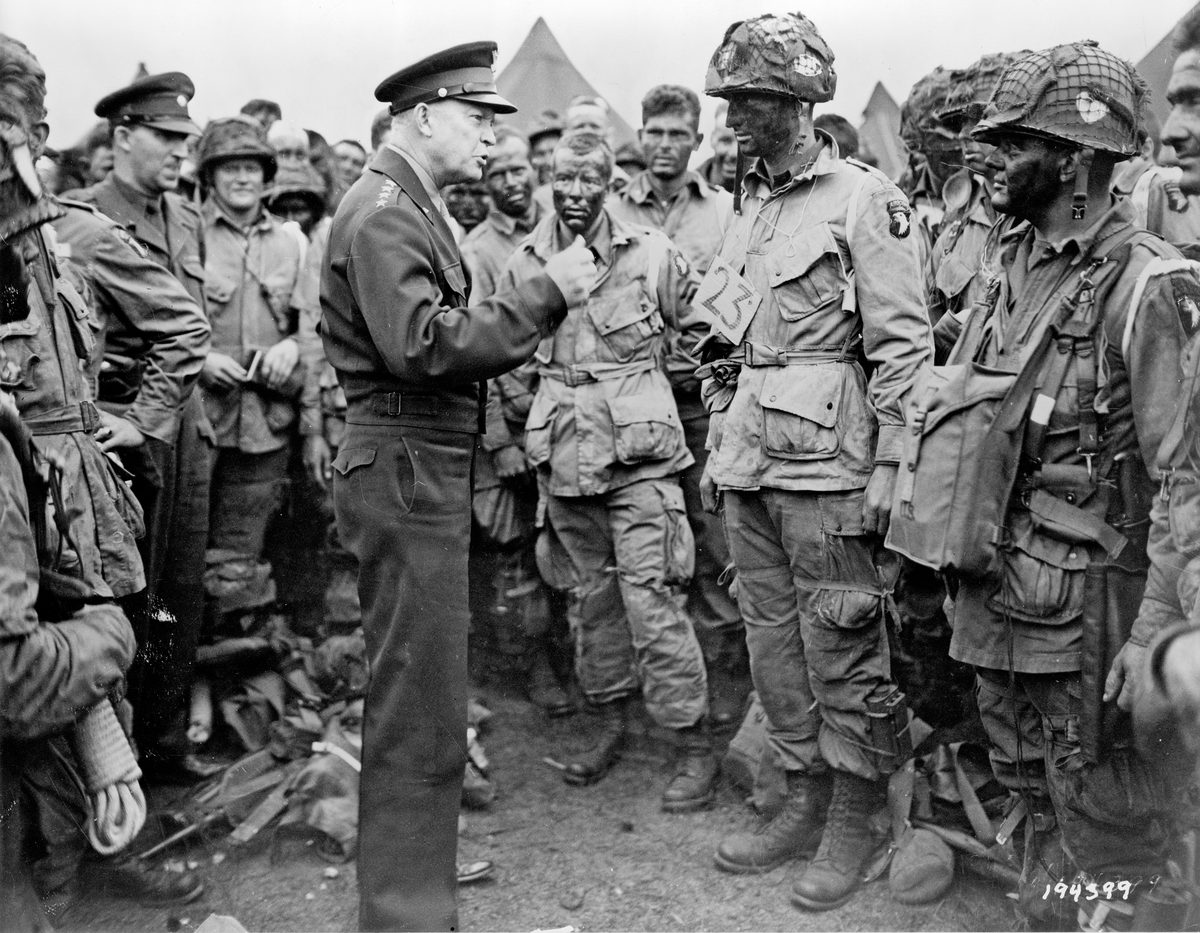
As Supreme Allied Commander of the Allied Expeditionary Force, General Dwight Eisenhower personally wrote few of the many orders issued by his headquarters.
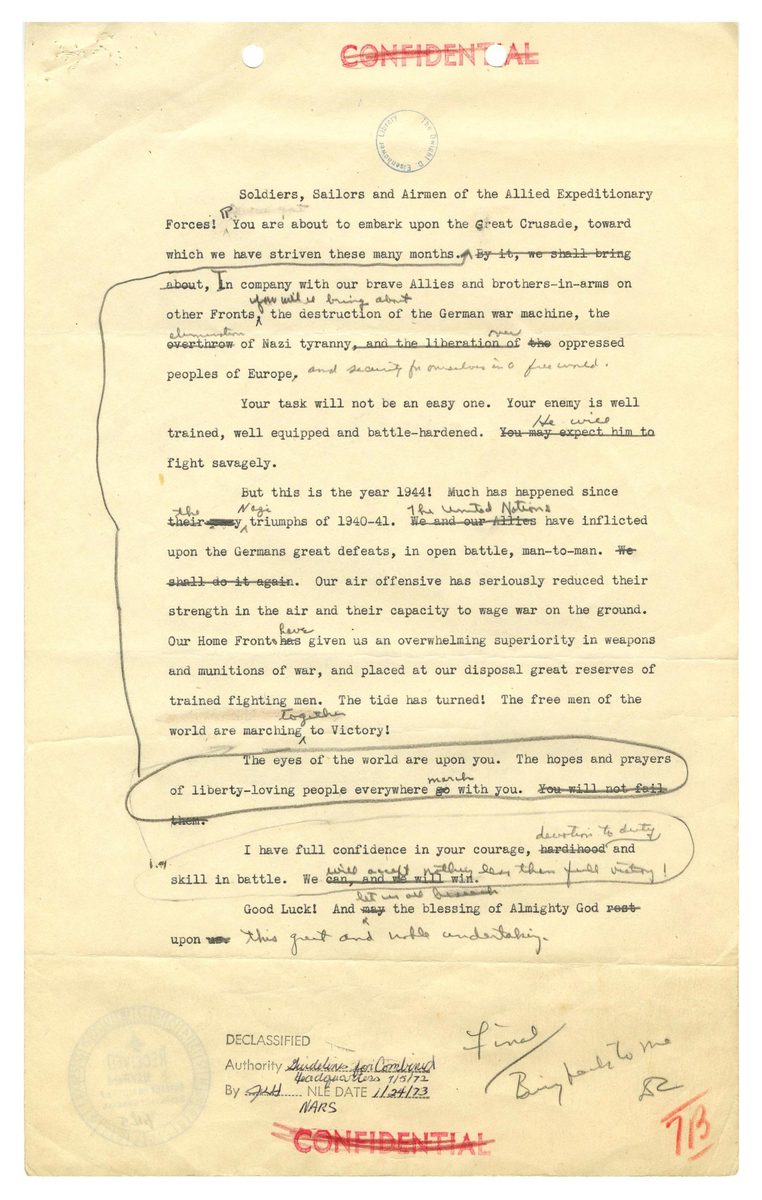
But one we know he authored is the famous “Order of the Day” for the June 6, 1944, D-Day invasion, because early versions of the order with edits in his hand are preserved in the archives at the Eisenhower Library.
Having been named the commander of the invasion effort in December 1943, D-Day had been Eisenhower’s focus for months. Reportedly, Ike began drafting the order in February 1944, a full four months before the invasion, a reflection of the importance he ascribed to the message.
Certainly, graduating first in his class at the Command and General Staff College at Fort Leavenworth meant that Eisenhower knew how to write a good military order. But what is striking about his D-Day order is not its adherence to military doctrine, but rather its complete departure from typical martial style and format.
From Eisenhower’s early drafts to its final version, we can see a gradual transition in how he interpreted his role as Supreme Commander of the Allied effort, and how he gradually realized his responsibility was to communicate broad uplifting themes and goals rather than military direction.
Early versions of the order were utilitarian and military in tone. Later versions, for example, replaced “great undertaking” with “Great Crusade.” Early versions came to the point more slowly, but in the final order, Eisenhower put the stakes involved right at the beginning:
“The hopes and prayers of liberty-loving people everywhere march with you.” General Dwight D. Eisenhower, Order of the Day, June 6, 1944
In the end, the final order reads more like eloquent speech than an order, starting with the importance of the task, followed by the enormity of the challenge, but then ending with confidence, resolve, and an exhortation for victory. In these rhetorical choices, one sees how Eisenhower embraced the challenge to provide the free world with the moral clarity and purpose for the invasion. While addressed to the military men and women participating in the attack, the order was clearly designed for a broader audience.
The tone in Eisenhower’s order still resonates today as an example of how leaders can mobilize support and provide direction to a great cause.