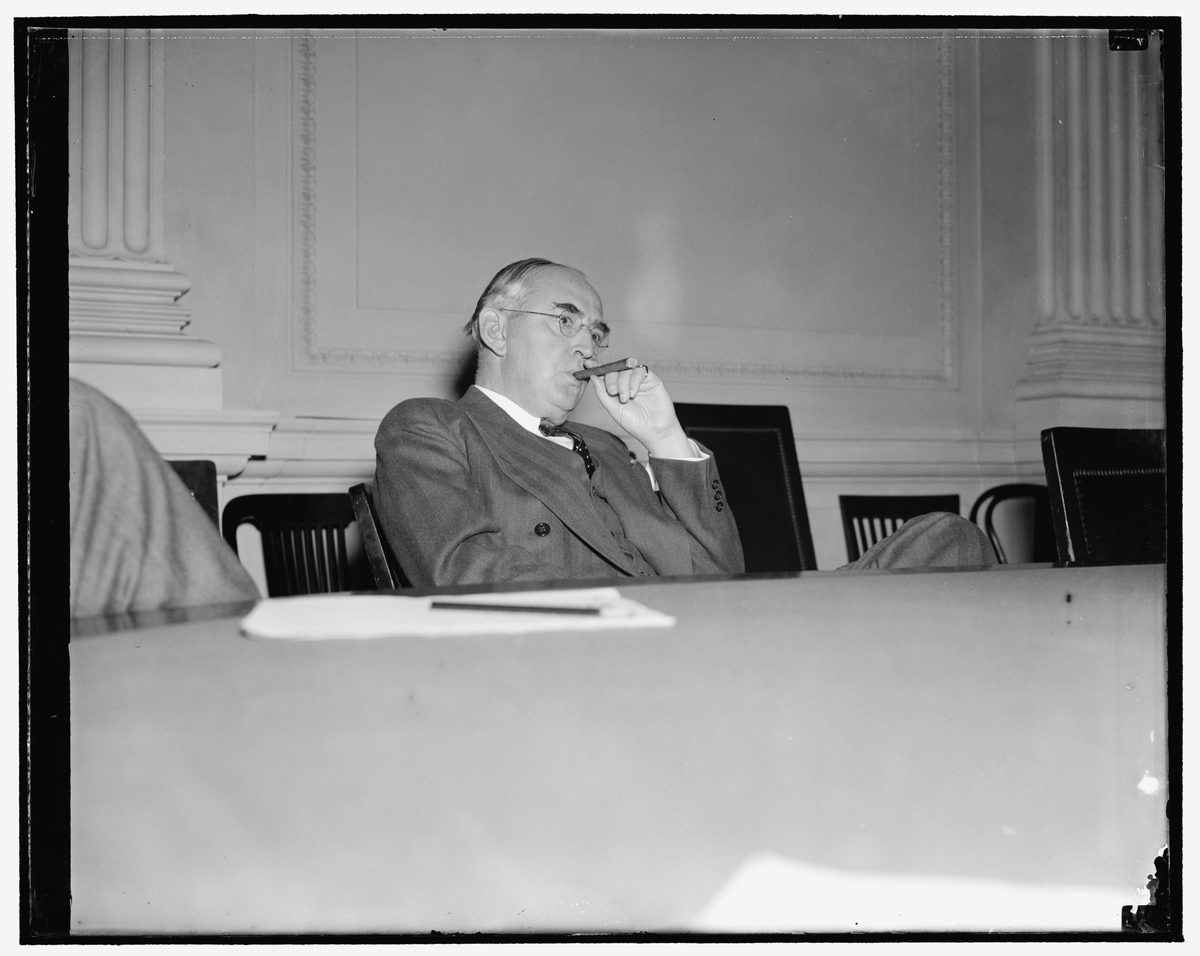
As World War II raged, there was ongoing debate over America’s level of engagement on the global stage in the postwar world. On January 10th, 1945, Senator Arthur Vandenberg (R-MI) issued his “Speech Heard Round the World” on the U.S. Senate floor, where he argued for strong U.S. leadership and outlined his view for a path forward after the war.
Senator Vandenberg was concerned that President Franklin D. Roosevelt would forge a partnership with Soviet dictator Joseph Stalin at the upcoming Yalta Conference that would undermine U.S. security. This fear led Senator Vandenberg to make the case that to advance our self-interest, America needed to assume a global leadership role, and we could not afford to retreat within our borders.
While initially known as an isolationist, Senator Vandenberg preferred the term “insulationist,” believing the United States should be as insulated from the rest of the world as contemporary circumstances allowed. Pearl Harbor had demonstrated our oceans were no longer enough to insulate us from outside threats, and Senator Vandenberg began working to articulate a “middle ground between those extremists at one end of the line who would cheerfully give America away and those extremists at the other end of the line who would attempt a total isolation which has come to be an impossibility.” His speech, which was immensely popular with the American people, recognized that protecting American security and freedom in a postwar world would require the United States maintaining a more robust global presence than he once thought necessary.
In his final years, Senator Vandenberg played an outsized role shaping America’s early Cold War policies to insulate the United States from the Soviet threat, including successfully leading the fights in Congress to pass the Marshall Plan and the North Atlantic Treaty, which led to the creation of NATO. His support was also crucial for the creation of the United Nations, though he also foresaw and warned about many of its current failings.
Senator Vandenberg’s balanced view of America’s enlightened self-interest and call for “honest candor” from our leaders remain essential guiding principles for U.S. foreign policy today. We are still tempted to cut deals with dictators for short-term expediency, but that will compromise American security in the long run. And once again, contemporary circumstances do not allow for both retreat and American greatness. The United States faces many complex crises simultaneously. The Chinese Communist Party is committed to creating a new global order where the American people are subservient to Beijing, and China is working with other American adversaries like Russia and Iran to undermine American security, influence, and freedoms. Just as Senator Vandenberg did, we too must build and maintain strategic, insulating layers to protect U.S. interests and ensure America remains the beacon of liberty.