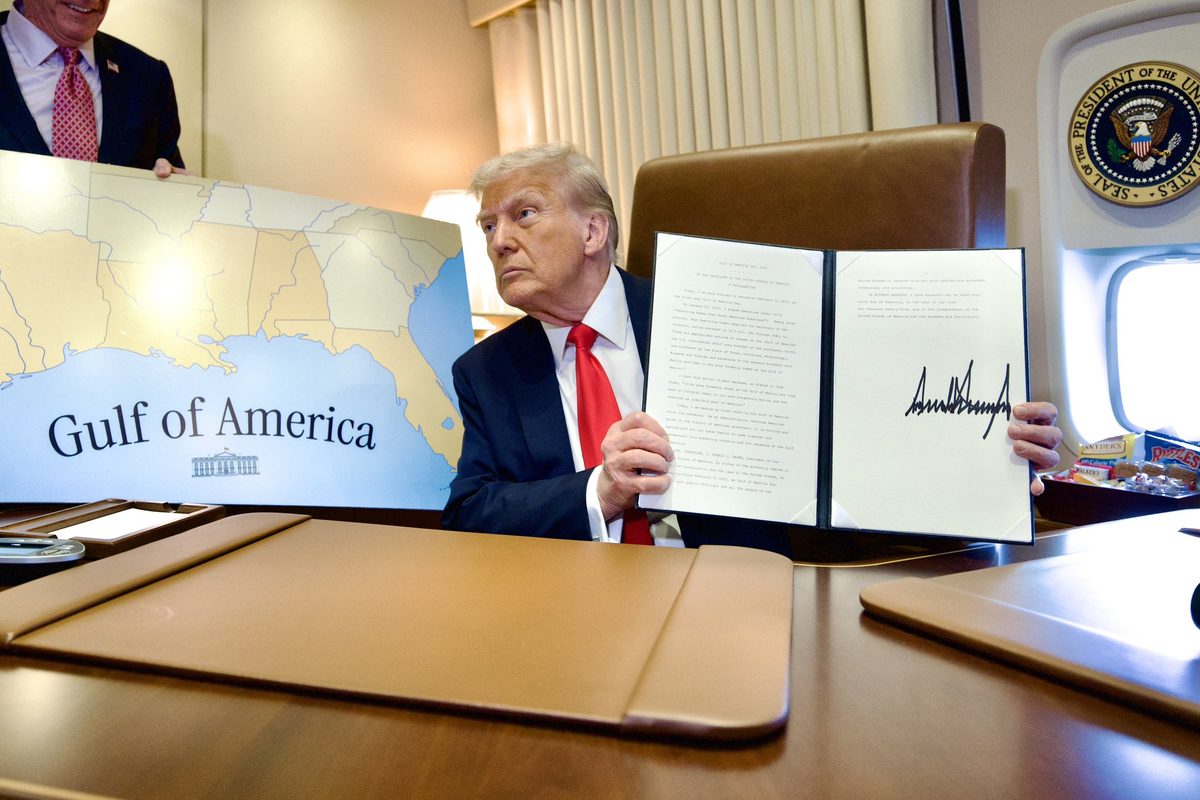
The National Security Strategy’s declaration of a “Trump Corollary to the Monroe Doctrine” continues a long line of thinking about the strategic importance of the Western Hemisphere to the United States, its security, and its global influence. This began with the Monroe Doctrine itself in 1823. Several paragraphs in a much longer text, the Monroe Doctrine declared the Western Hemisphere to be a zone free of European colonial influence. At its core, it was one of the first strategic statements on the importance of the Western Hemisphere, and of the United States’ firm support for republican governments around the world. Having broken free of the European yoke during the Napoleonic Wars, the Monroe Doctrine expressed the solidarity of the United States with many of the newly established republics that dotted the Americas, declaring that the greatest threat to their freedom and survival as political projects would be a European attempt to recolonize them.
Of course, in 1823, the United States was nary a regional power much less a globally influential one. At best, the Monroe Doctrine was aspirational. As the century wore on, however, the United States rose to global prominence. By the mid-1880s and definitively by the 1890s, the United States was not only one of world’s great powers, but it used its newfangled economic might to build a world-class military under the direction of Assistant Secretary of the U.S. Navy, Theodore Roosevelt. Later, as President, Roosevelt would promulgate his eponymous Corollary to the Monroe Doctrine, which asserted the U.S. right to exercise “international police power” to intervene in the Americas and to shape political outcomes in the U.S. interest.
Thus, the Trump Corollary continues this well-established way of thinking about the U.S. role in the Western Hemisphere. After decades of strategic drift and, frankly, mostly ignoring the Americas in favor of other geographies, the Trump Corollary heralds a muscular return to the region. Indeed, less than a month after the publication of the Trump administration’s NSS, it conducted Operation Absolute Resolve, an extraordinary mission to capture Venezuelan dictator Nicolas Maduro and his wife Cilia Flores, whisking them to New York to stand trial on drug trafficking charges. Beyond military operations, the Trump Corollary concerns itself with economic competition in the Americas, evincing a concern for adversarial operation and control of strategic infrastructure, such as ports and space stations, as well as strategic geographies, such as mines and oil fields. The Trump Corollary has put both China and Russia on notice that their presence in the Americas can no longer be taken for granted, and that the free rein they previously enjoyed is over. There is an opportunity for the United States to fill the void left by China and Russia as they step back to evaluate the competitive instincts of the Trump Corollary.