The Beacon of Liberty:

250 Years of American Foreign Policy

Since the Declaration of Independence, American citizens and their elected officials have debated the appropriate role for the United States in the world. To celebrate 250 years of American independence, The Vandenberg Coalition asked our network to dive into these debates and the history of American national security, focusing on the lasting impacts of the key speeches and documents from the last quarter millennium. As this timeline shows, the importance of American global leadership to secure our interests and protect our values has grown significantly, as have the responsibilities and challenges that global leadership entails. Woven throughout the timeline is one key message—that American leadership is nuanced, ever-evolving, and essential to the preservation of our most beloved freedoms.

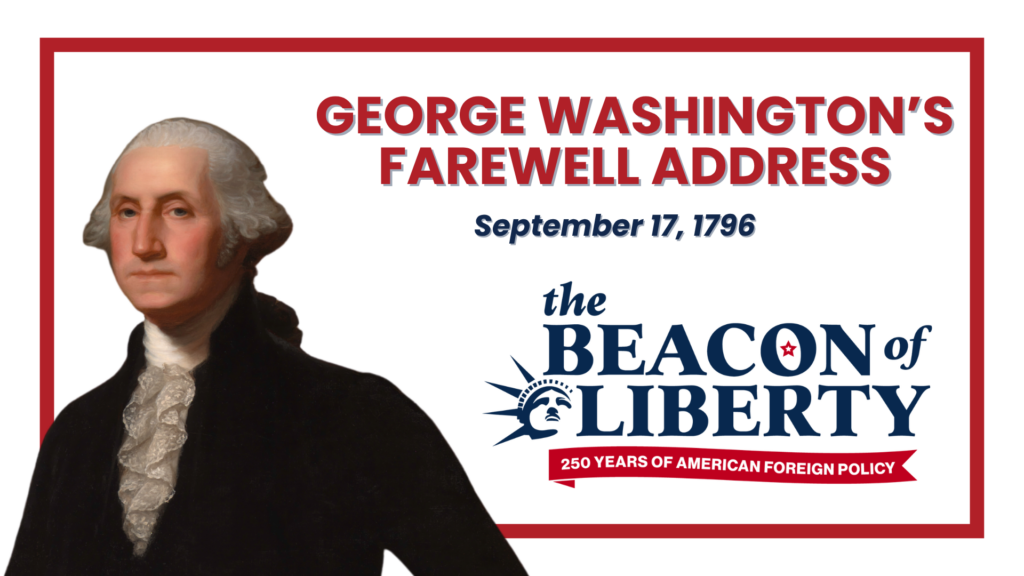
George Washington’s Farewell Address | The Beacon of Liberty, Ep. 7

On September 19, 1796, President George Washington gave his parting advice to a new nation trying to navigate a challenging new world. Yet, contrary to the claims of “Farewell Address Fundamentalists,” Washington’s advice that the United States should remain neutral in the European conflicts of that time was never meant to suggest a permanent strategy of isolation.
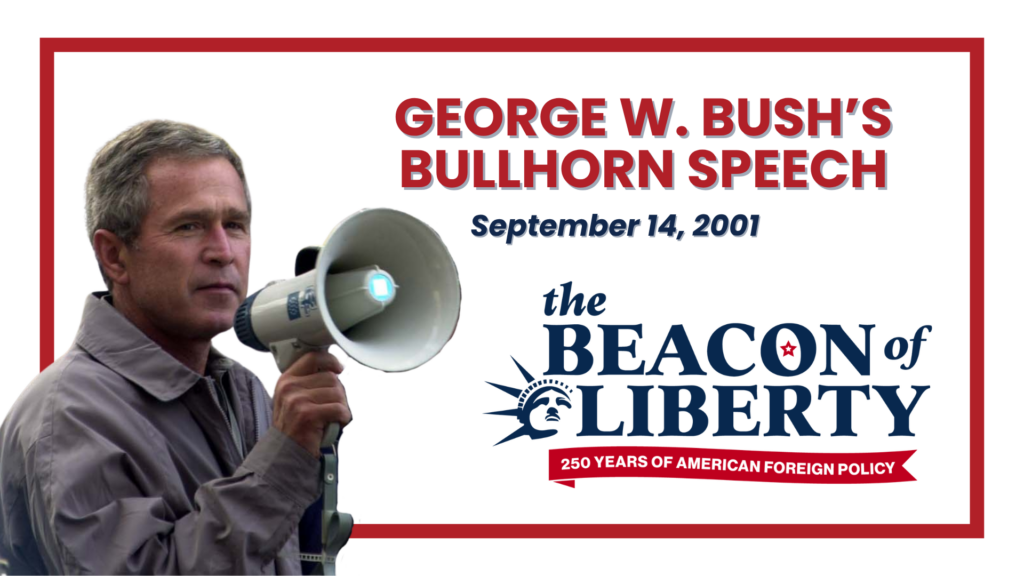
George W. Bush’s Bullhorn Speech | The Beacon of Liberty, Ep. 6

On September 14, 2001, President George W. Bush offered hope and resoluteness to a nation reeling from tragedy in a speech that lasted only two minutes. Three days after the September 11th terrorist attacks, Bush gave impromptu remarks to the firefighters and responders cleaning debris during a visit to Ground Zero in New York City.

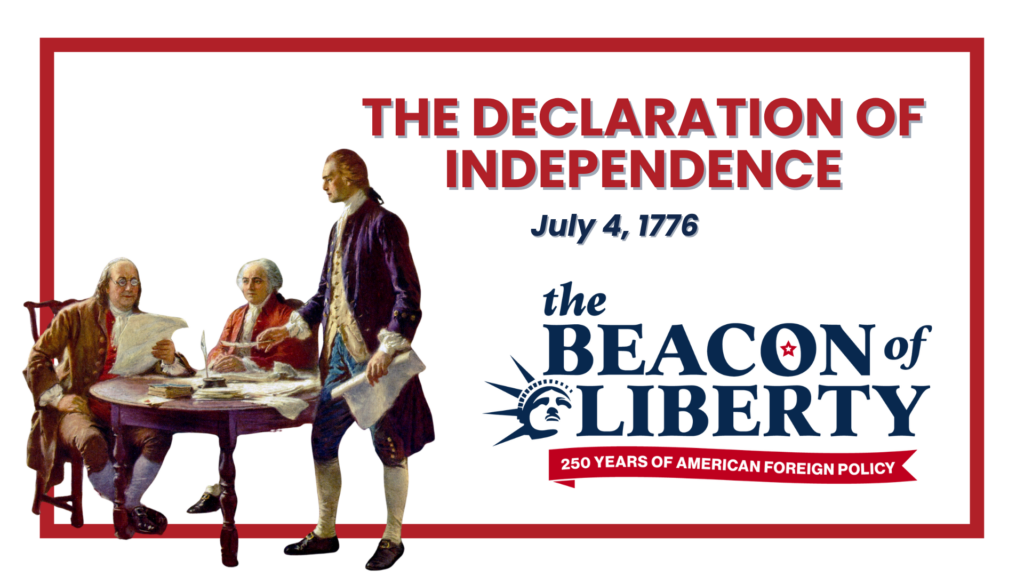
The Declaration of Independence | The Beacon of Liberty, Ep. 5

On July 4, 1776, the Continental Congress officially adopted the Declaration of Independence, signing and sealing the United States as a sovereign, independent nation. Not only did the Declaration of Independence proclaim the ideas at the nexus of the American experiment—namely, that an American government with the consent of the governed must protect the unalienable rights endowed to its citizens by their Creator—but it also serves as a foundational text for how the United States engages with the world.